
Avoiding IDR with Confidence: Reliant’s Strategy for Success
The No-Surprises Act has been at the forefront of discussions between payers and providers and how it impacts the dynamic of managing costs that were once the responsibility of patients. Previously, patients were faced with out-of-network (OON) emergencies and other costs, burdening them with unexpected bills.
Since the introduction of this act in 2022, the responsibility has shifted, creating a need for payers and providers to become equal partners to address patient costs while prioritizing their best interests. A persistent challenge that has emerged, creating payer frustration, is the desire to avoid the Independent Dispute Resolution (IDR) process.
Navigating Challenges: NSA Regulations and QPA Calculations
Lack of awareness or failure to adhere to NSA regulations and inaccurate QPA (qualified payment amount) calculations are just some key factors that lead to many falling into the IDR process. It can be challenging to find an organization that possesses the necessary level of expertise in NSA statutes and regulations. With this gap of knowledge, confidence in payers handling cases diminishes, leaving members with growing frustration.
When members pressure payers to provide guidance on their cases, payers often rush to address NSA requirements. Unfortunately, this rush can lead to utilizing inaccurate data, flawed logic, and outdated information, resulting in non-compliance with NSA standards. In some audit cases, CMS found inaccuracies in QPA calculations, revealing instances where providers were being overpaid and members overcharged. A recent audit found that reimbursements for air ambulance services had failed to comply with NSA requirements and QPA’s were miscalculated. These discrepancies further raised concerns about the accuracy and fairness of the NSA process, leading to an increase in CMS audits. Additionally, failure to disclose QPAs contributed to the lack of transparency and failure to meet NSA disclosure requirements.
CMS audits highlight the urgent need for experts that have knowledge of NSA regulations, as well as a process to create accurate QPA calculations. This expertise can effectively minimize the risk of entering IDR and better enhance the overall member experience. It is essential for payers to seek innovative solutions that incorporates advanced analytical tools, ensuring this process is as seamless as possible.
Reliant’s Strategy: NSA Navigator
With the rise in audits, it’s crucial to educate payers and introduce innovative solutions to help them be compliant with NSA regulations. With over 30+ years in the industry, Reliant has prioritized staying informed about NSA statues and standards and has created NSA Navigator - allowing us to offer our expertise while actively avoiding open negotiations and IDR.
We educate our payers on:
Jurisdiction over particular cases.
Patient rights related to member balance billing.
Accurate calculation of QPAs.
We provide a team of experts that ensure payers achieve optimal outcomes by providing guidance on NSA regulations, helping them avoid open negotiations from the start.
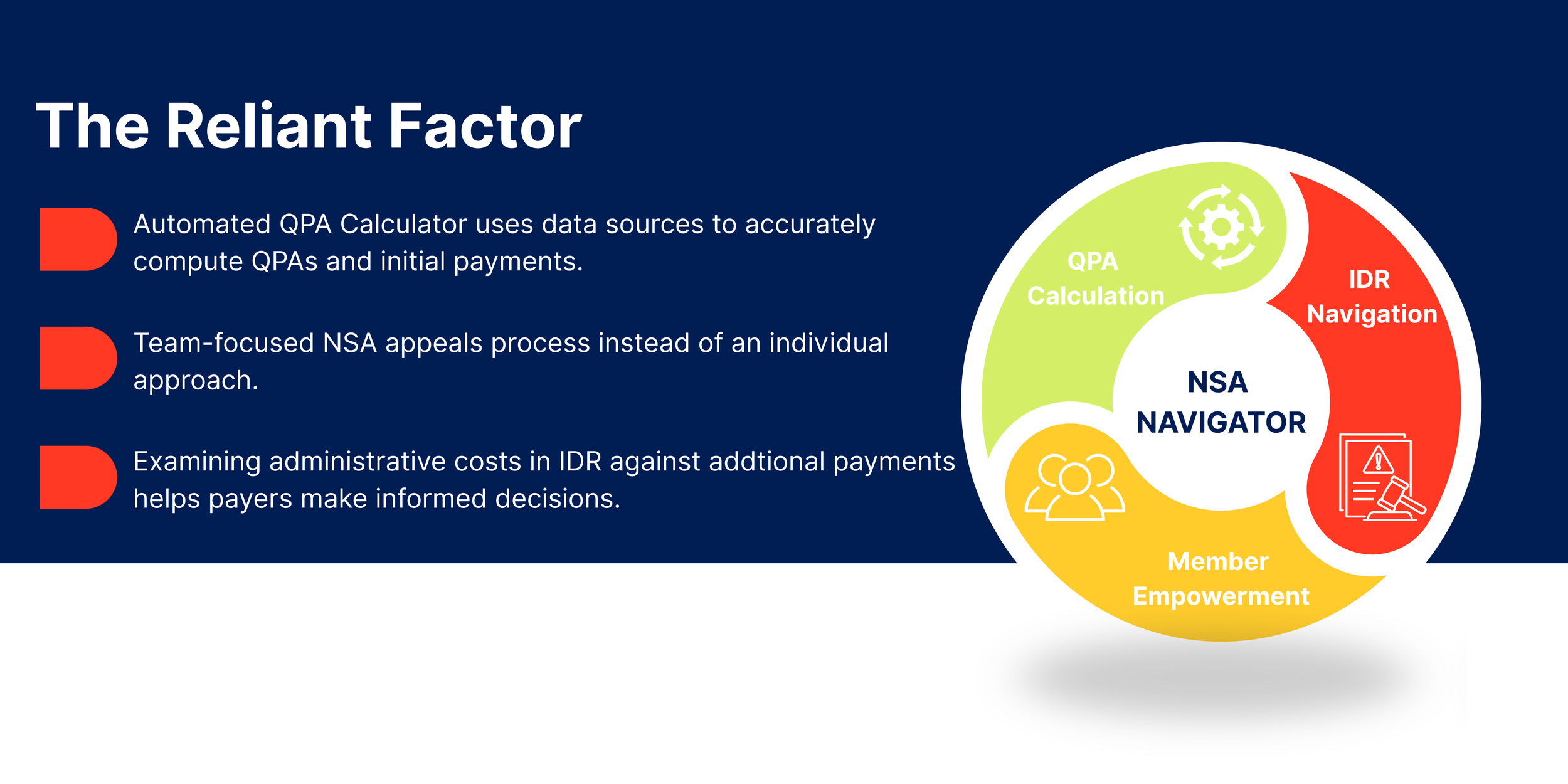
With Reliant’s extensive experience in managing OON claims, our team of experts are positioned to effectively guide payers through NSA compliance and remain committed to equipping them with our innovative solutions. This is Reliant’s specialty, and you will see the difference in our level of expertise, knowledge of NSA regulations, and unparalleled claims transparency and tracking.
To maximize savings while minimizing noise, get in contact with our team.