
IDR 101: Payment Determination
A significant number of disputes are failing to make it through the IDR process. The reason is simple: regulations are complex. Navigating the rules and requirements can be troublesome for both providers and payers and often can lead to miscommunication and issues. As regulations begin to be interpreted differently than what is intended, delays and frustration start to rise. To find a solution, we first need to understand which and why disputes are getting stuck and how payment is determined in the IDR process.
Behind the Scenes of IDR Payment Determinations
Understanding what factors influence IDR payment determination is essential for successfully navigating the IDR process. Regulations generally require an IDR entity to issue a decision to the parties involved and close a dispute within 33 business days from the time of the initial selection. However, timelines can be difficult to achieve, especially with complex disputes or when there is a lack of preparation. Although there have been improvements over time, they have been too slow for it to be truly effective.
How Well are Disputes Following Determination Timelines?
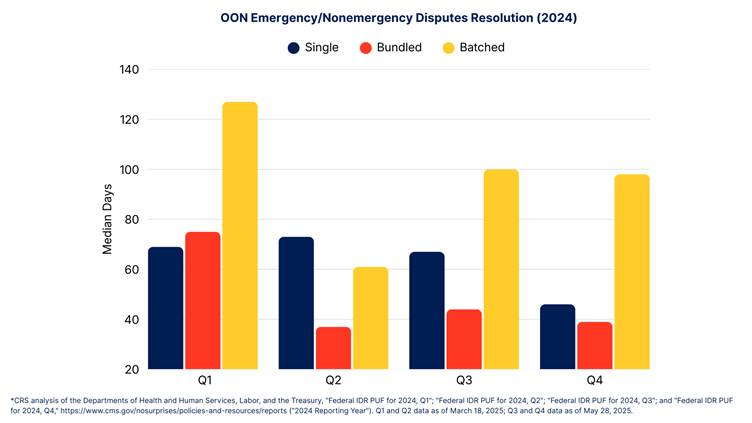
Single disputes are being resolved faster, with bundled disputes moving in the same direction. Batched disputes continue to vary the most as disputes keep fluctuating over time.
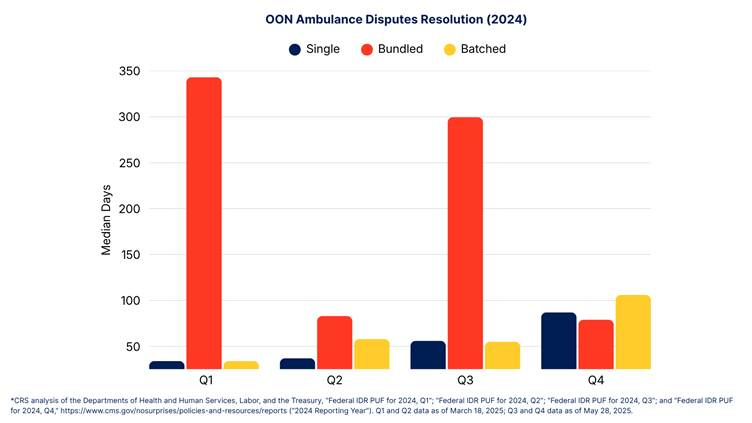
These disputes continue to swing more than OON emergency and non‑emergency cases. Single and batched disputes are easing only slightly compared to bundled disputes that continue to be unpredictable.
Bottom line: Disputes are still missing resolution deadlines and are not following regulations.
Payment: Offers vs QPA
Recent findings show that QPAs remain the main anchor in negotiations. Payment offers below the QPA are uncommon and payment offers above the QPA are frequently increasing. The good news? Offers equal to the QPA are also steadily increasing.This trend shows the shift in negotiation dynamics and highlights the importance of one being educated in IDR negotiations and to be informed on current trends to ensure fair payment determinations are achieved.
Reliant’s Guide to Understanding IDR
Reliant understands the frustration that comes with navigating the complex landscape of IDR regulations and are committed to educating all parties on the process and providing the tools and knowledge to navigate the IDR process such as:
Case Evaluation
Reliant looks into the eligibility and complexity of each case to determine offers in relation to the QPA.
Data‑Driven Offers
We analyze key data to determine an offer that best represents the value of the service for fair reimbursement and maximum savings.
Offer Support and Strategy
By partnering with clients, Reliant helps establish sensible ranges during open negotiation and IDR to determine the best offer amount.
Regulation Review
Monitoring any potential regulatory or statutory changes is essential as it may impact eligibility, IDR, or the QPA methodology.
Reliant aims to prevent going into IDR but if IDR becomes necessary, our expert team strives to alleviate the stress caused by the complexity associated with IDR while providing cost effective solutions powered by our ClaimSaveIQ. Trust Reliant to be your partner to guide you through regulations with ease and expertise.
Maximize Savings. Minimize Noise.
Get in touch with our team.