
IDR Has Entered the Boardroom
Independent Dispute Resolution (IDR) has gained traction among health plans, and now it’s making waves in the media as well. A recent New York Times article reported on the action being taken by officials to combat some of the negative impacts of the No Surprises Act (NSA), namely the rising payments awarded to certain doctors and the billing firms that helped them file their cases.
With more and more claims being taken to arbitration, it’s no longer an operations problem for many organizations. It’s becoming an urgent reputational, regulatory, and cost-management issue.
Many organizations see themselves fall into IDR due to the increased lack of awareness to adhere to NSA regulations and inaccurate Qualifying Payment Amount (QPA) calculations. Health plans have struggled to identify organizations that have the proper tools and level of expertise in these regulations. Now is the time for health plan leaders to partner with experts in out-of-network cost containment, or they may have to confront the growing IDR challenges on their own.
The Growing Pains Behind IDR
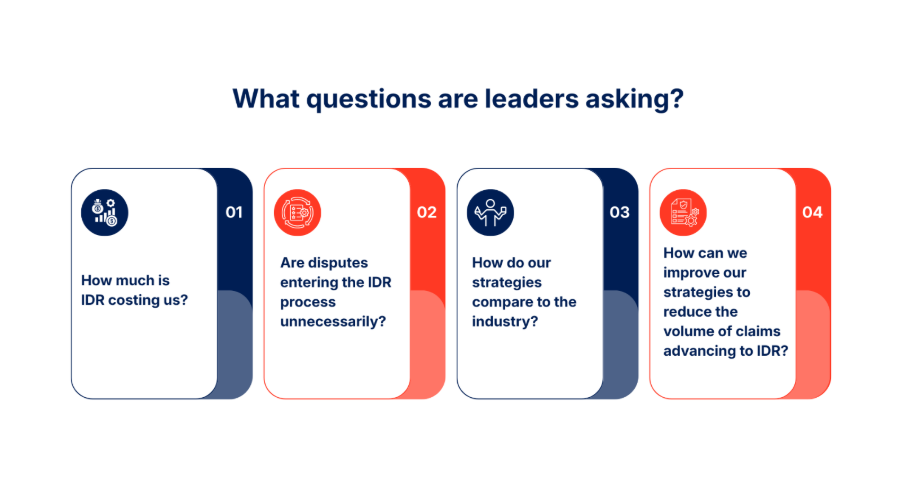
With IDR gaining significant attention from lawmakers, media, and investors, leaders are starting to reevaluate their organizational strategies and the existing gaps within them.
For executives, the stakes have never been higher. Ensuring compliance with NSA regulations and understanding the complexities of IDR is essential, not only to stay compliant with regulations, but as a crucial strategy for managing IDR spend. As the volume of disputes continues to surge, so do costs such as administrative and entity fees. At the same time, there is a growing public scrutiny that can impact an organization's reputation.
What was considered a health plan level issue has now escalated into an organizational concern for executives.
What’s Driving Rising IDR Costs?
IDR was designed to help the resolution of disputes; however, the volume of disputes has been greater than anticipated. While recent rules aim to reduce administrative fees by lowering them from $115 per dispute to $15, it can lead to higher fees overall due to increased dispute filings. As a significant number of providers continue to utilize the IDR process to address disputes, the system continues to experience a growing backlog of claims waiting to be processed.
What the Data Can Tell Us
Health plans can start at the beginning of the process, where the opportunity to identify claims properly exists early on. This allows them to address eligibility, coding, and classification before they become formal disputes.
Recent data analysis from the PUF files reveals that carriers have:
Failed to object to eligibility
Failed to make a justifiable argument about coding errors by a provider
Defaulted due to nonpayment of IDR fees or ineligible IDR services
Failed to challenge in a technical audit
Failed to properly resolve in open negotiations
Failed to identify the NSA claims that could be a surprise to the carrier.
With politicians now closely examining health plans and their IDR methods, it's time for organizations to enhance and proactively strengthen their initial process to be better positioned and prepared.
Reliant’s Approach to IDR Challenges
The way to approach IDR is changing. Organizations that view this solely as a reimbursement challenge will find themselves falling behind. However, those who understand that IDR is now a boardroom issue touching finance, compliance, operations and company reputation will find themselves equipped to take the next step and find a partner to guide them to manage costs.
In situations where providers bill an emergency room visit or critical care visit with an invalid place of service code, Reliant provides assistance to the health plan. We have been able to identify 28% of out-of-network claims as NSA which not only protects the claimant but also reduces overall healthcare costs that result from surprise billing laws. In doing so, we prevent government error in failing to protect a patient from balance billing. With 12% of claims coming from procedures or services rendered as an in-network facility, Reliant is able to capture 40% of those claims. This strategic approach not only shields health plans from potential financial risks but also ensures compliance with NSA regulations while safeguarding their reputations.
Instead of getting a surprise claim subject to the NSA, we minimize the risk by capturing them upfront. But the best way to lower costs? Avoiding IDR. Discover the tools to confidently navigate NSA regulations.